The Tea Road was an international trade route for tea commodities between China and Russia from the 17th century to the first half of the 20th. At present, Hubei's Hankou Customs House, the Russian merchants' building complex in Hankou, the Ancient Town of Chibi, and another seven places are on the list of the "Ten Thousand Mile Tea Road" application for world heritage recognition.
Between July 19 and Aug. 23, the group visited local cultural heritage of the Tea Road in Wuhan and Xianning.
Hankou Customs: tea exports account for 60% of national tea export volume
Hankou Customs was first established in 1862 after the opening of Hankou Port. The customs building, located at the intersection of the three towns of Wuhan, was completed in 1924.
Tu Wenxue, an expert in the visiting group and dean of Wuhan Research Institute of Jianghan University, said that in the 1860s, Hankou had become China's largest inland tea trading port. According to the customs report of Hankou Customs, the tea exported through Hankou Port accounted for 60% of the national tea export, which lasted as long as 60 years.
"Wuhan was the starting point of the Tea Road between China and Russia in the 19th century. After the opening of Hankou Port in 1861, Hankou rapidly expanded from a trans-shipment port into an important tea production and storage trade town, gaining the reputation of the 'Oriental Tea Port'," Tu said.
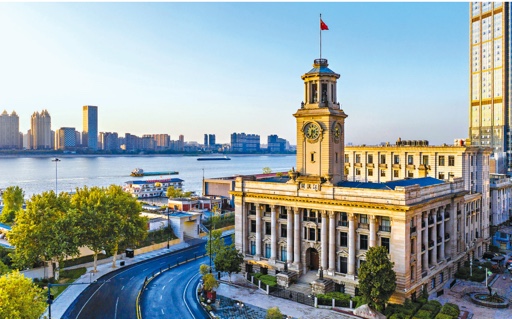
Hankou Customs House
Banov's House: starting point of Wuhan's modern industry
On July 19, the group came to Banov's House" whilst it was under renovation. It was built in 1910 by the Banov brothers, who were Russian tea merchants and the last Tsar's cousins.
The older brother J. K. Banov was the boss of Fuchang brick tea factory, one of the four major Russian businesses in Hankou. He also served as the then Russian Consulate General in Hankou.
His younger brother developed the steam engine for tea manufacturing. This is regarded as the starting point of Wuhan's modern industry.
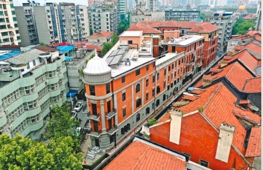
Banov's House
Yangloudong: brick tea mentioned by Karl Marx
Yangloudong is the birthplace of the Chinese time-honored brand "Chuan" brick tea and "Songfeng" green tea. In 2015, the International Tea Committee recognized Yangloudong as the "Top Ancient Town of Tea."
"Karl Marx mentioned brick tea in Yangloudong in his book about tea trade between China and Russia. Lenin drank tea from Chibi and met Liu Junzhou, a tea merchant at Yangloudong of Chibi," said Rao Jie, deputy manager of Chibi Culture
Tourism Investment & Development Company.
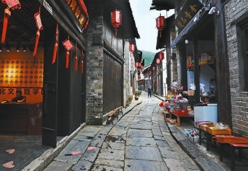
Street in Ancient Town of Yangloudong
Zhaoliqiao Tea Factory: 'Intangible cultural heritage' green tea bricks
On Aug. 23, the group came to Zhaoliqiao Tea Factory in Xianning. The factory mainly produces green tea bricks and rice tea bricks. Its production techniques of Zhaoliqiao brick tea is deemed as an intangible cultural heritage.
Chen Junhai, the inheritor, said that the green brick tea here is the most tightly-compressed tea in the world: the fresh tea leaves are collected, de-greened, rolled and sun dried, and later made into tea bricks by going through fermentation, replication, autoclaving, and packaging, which requires a total of six technologies and 72 processes.
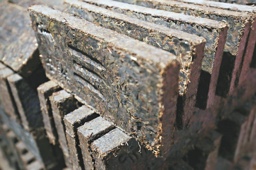
Green tea bricks produced by the factory
